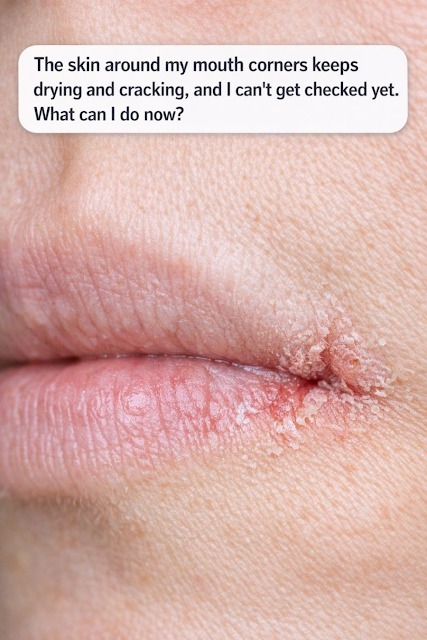
Cracked Skin at the Corners of Your Mouth?  Here’s What You Can Do Right Now to Heal It Fast
This condition is very common and often manageable at home when treated early and gently.
Why Do the Corners of the Mouth Crack?
The corners of the mouth are especially vulnerable because the skin there is thin and frequently exposed to moisture. When saliva collects in those tiny folds — especially during sleep or frequent lip licking — the skin softens, breaks down, and becomes irritated.
Common triggers include:
Frequent lip licking
Dry or cold weather
Drooling during sleep
Irritation from toothpaste
Wearing masks for long periods
Nutritional deficiencies (especially iron or B vitamins)
Mild fungal or bacterial overgrowth
The medical term often used for this issue is “angular cheilitis,” but you don’t need a diagnosis to start basic supportive care.
What You Can Do Right Now
If you can’t get checked yet, focus on protection, moisture, and avoiding irritation.
1. Keep It Clean — Gently
Wash the area once or twice daily with lukewarm water. Avoid strong soaps, facial cleansers with fragrance, or alcohol-based products. Pat dry carefully using a soft towel. Rubbing can reopen small cracks and delay healing.
Clean but gentle care prevents infection while protecting fragile skin.
2. Use a Protective Barrier (This Is Key)
The most important step is protecting the cracked area from saliva and dryness.
Apply one of the following:
Plain petroleum jelly
Zinc oxide cream (commonly used for diaper rash)
A thick, fragrance-free moisturizer
Apply a thin layer at least 3–4 times per day, especially:
After meals
After brushing teeth
Before bed
At night, you can apply a slightly thicker layer to create a stronger protective barrier while you sleep.
Barrier protection alone can significantly improve mild cases within a few days.
3. Stop Lip Licking
It may feel soothing in the moment, but saliva worsens cracking. It dries out the skin and encourages irritation. If your lips feel dry, reapply petroleum jelly instead of licking.
This simple habit change often makes a big difference.
4. Be Careful With Toothpaste
Toothpaste residue sitting in the corners of your mouth can irritate sensitive skin. After brushing, gently rinse and wipe the corners dry.
If irritation continues, consider switching temporarily to a mild, non-whitening toothpaste without strong flavoring.
5. Consider an Over-the-Counter Antifungal Cream
If the cracks are:
Red
Slightly swollen
Burning
Not improving after several days
A mild fungal overgrowth could be contributing.
In that case, you can use an over-the-counter antifungal cream containing clotrimazole 1%. Apply a thin layer twice daily for 1–2 weeks. Allow it to absorb, then apply a protective barrier on top.
Avoid using steroid creams without medical advice, as they can sometimes worsen fungal-related irritation.
Support Healing From Within
If this problem keeps returning, nutrition may play a role. Low iron or certain B vitamins can make skin more prone to cracking.
Focus on including:
Eggs
Leafy green vegetables
Beans and lentils
Lean meats
Nuts and seeds
Staying well-hydrated also supports skin repair.
What to Avoid
To help the area heal faster, avoid:
Picking at dry skin
Using flavored or scented lip balms
Applying harsh acne creams near the mouth
Scrubbing the area
Using strong exfoliants
The skin needs calm, consistent care — not aggressive treatment.
How Long Should Healing Take?
With proper care:
Mild dryness may improve in 3–5 days
Moderate cracking may take 1–2 weeks
Persistent or recurring cases may need medical evaluation
If you notice increasing pain, spreading redness, swelling, or discharge, seek medical care when you are able.
A Simple Daily Plan
Morning
Clean gently → Apply antifungal (if needed) → Apply barrier
Midday
Reapply barrier after meals
Night
Clean gently → Apply treatment → Apply thicker barrier layer
Consistency is more important than using many products.
The Bottom Line
Cracks at the corners of the mouth are uncomfortable but usually manageable with simple steps. Focus on:
Keeping the area clean
Protecting it with a barrier
Avoiding irritation
Supporting your nutrition
Most cases improve with steady, gentle care.
If you can’t get checked right now, don’t panic. Start with protection and moisture today — your skin often just needs the right environment to heal.




0 comments:
Post a Comment