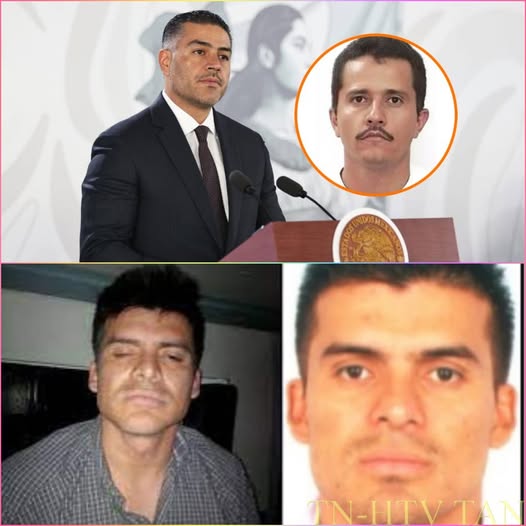
“El Chorro”: The Name Now Echoing in the Cartel Power Struggle
But who is “El Chorro” really? Is he just another member of a powerful crime family, or could he be the next figure to step into one of the most dangerous roles in the hemisphere?
 A Power Vacuum After El Mencho’s Death
The death of Nemesio Oseguera Cervantes, better known as El Mencho, marked a seismic shift in the world of Mexican organized crime. El Mencho was the long-time leader of the Cártel Jalisco Nueva Generación (CJNG), a group that for years has been one of Mexico’s most powerful trafficking organizations, known for operating across multiple states and dispatching enormous quantities of fentanyl, methamphetamine, cocaine, and other drugs to the United States and beyond.
His death — reported during a coordinated operation involving Mexican forces, with U.S. intelligence support — instantly triggered uncertainty about who would take control of the cartel’s sprawling network.
Without a clear successor to step into El Mencho’s shoes, several powerful figures within the organization now find themselves in a high-stakes struggle for influence. Among them, one name stands out: El Chorro.
 Who Is “El Chorro”?
“El Chorro” is the known alias of Julio Alberto Castillo Rodríguez, a figure identified by U.S. authorities as a senior member of the CJNG. What makes him especially notable is not just his operational role within the cartel, but also his family connection — he is the son‑in‑law of El Mencho.
According to official designations by the U.S. Department of the Treasury, Castillo Rodríguez has been linked to high-level activities within the cartel, particularly in coordinating access to precursores químicos (chemical precursors) at strategic points like the Port of Manzanillo in Colima — a crucial entry point for substances used in fentanyl production.
His influence in such an important logistical hub suggests a deeper role than that of a mid-level commander — and this has led U.S. agencies, including the Office of Foreign Assets Control (OFAC), to list him as a possible successor to Mencho’s leadership role.
 A Family Plot — Or a Strategic Move?
El Chorro’s family connection has raised eyebrows. In the world of cartel leadership, blood ties and marriage can sometimes create powerful alliances — but they do not guarantee uncontested authority.
While familial relationships can provide leverage and trust within criminal structures, succession in major cartels like the CJNG is rarely straightforward. Power is maintained through violence, loyalty, strategic alliances, and a demonstrated ability to control territory and operations.
Experts point out that the CJNG’s leadership model is not strictly hereditary. Historically, cartel bosses promote those who can prove themselves capable of handling territorial command, logistics, enforcement operations, and international trafficking networks. Mencho himself rose from humble beginnings, not through inheritance, but through a combination of ruthlessness and strategic acumen.
Yet El Chorro’s proximity to the family does offer him a distinct advantage — visibility, credibility, and a network of potential loyalists who may see him as a continuation of Mencho’s legacy rather than an outsider.
Other Contenders and a Fractured Power Struggle
El Chorro isn’t the only name being discussed as a possible successor. Following Mencho’s death, authorities have identified at least four significant figures within the CJNG structure who could also emerge as power brokers or challengers in the coming months:
El Jardinero (Audias Flores Silva) – A dangerous and high-ranking operational leader with control over key regions.
El Sapo (Gonzalo Mendoza Gaytán) – Known for his role in recruitment and territorial management.
El 03 (Juan Carlos Valencia González) – Mencho’s stepson, another family member with influence.
El Doble R (Ricardo Ruiz Velasco) – A senior operator with significant regional influence in Guadalajara.
This lineup reveals a fractured landscape of potential heirs — family members, trusted lieutenants, and powerful regional commanders all vying for control amid uncertainty.
 Why His Name Is Getting Louder
El Chorro’s name has risen in prominence for several reasons:
 Family Influence
Being married to Mencho’s daughter gives him symbolic significance within the cartel — a figure around whom some loyalists might rally.
Strategic Position
His reported access and influence over chemical supply routes, especially in Manzanillo, place him at the center of production chains critical to the cartel’s business model.
Recognition by U.S. Authorities
Official designations by the Treasury Department and OFAC highlight him among leaders with operational weight — an unusual distinction that signals his strategic importance.
But whether this translates to uncontested leadership inside the CJNG remains uncertain. Cartel succession is rarely peaceful — it can trigger internal conflict, split loyalties, and turf wars, potentially destabilizing the group and leading to broader violence.
 What This Could Mean for Mexico and Beyond
The death of El Mencho sent shockwaves not just through the CJNG, but across Mexico and international law enforcement. Authorities are closely watching the fallout, as changes at the top of such a powerful cartel can lead to:
 Shifts in criminal alliances Increased internal conflict Territorial disputes with rival organizations Changes in trafficking routes New patterns of violence and retribution
Because the CJNG operates not only in Mexico but across borders, any leadership transition carries implications for public safety, international drug flows, and diplomatic pressure between Mexico and the United States.
 Final Thoughts
“El Chorro” is far more than a nickname. In a world where power is contested, tested, and enforced through violence, his rise — whether realized or challenged — marks a critical moment in the cartel’s history.
Whether he becomes the quiet heir of a criminal empire, a leader in a fractured power struggle, or just another figure among many contenders, one thing is clear: the CJNG’s next chapter could reshape the landscape of organized crime in Mexico and beyond.




0 comments:
Post a Comment