What Does the Letter “M” on Your Palm Mean? The Fascinating Tradition Behind This Popular Palmistry Symbol
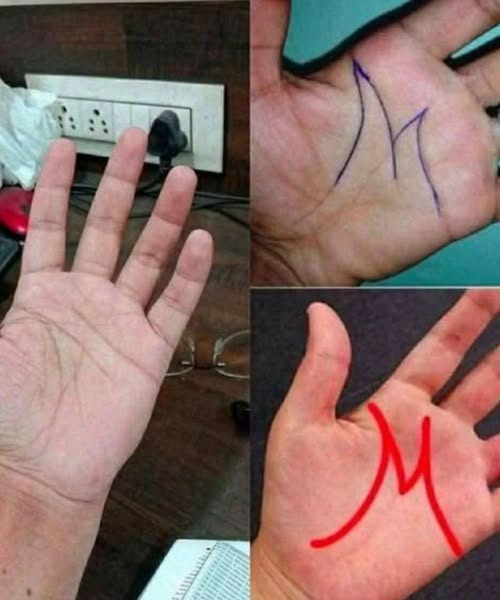
In traditional palm reading, the “M” shape is often viewed as a positive symbol. Palmists may associate it with qualities such as determination, intuition, confidence, and strong decision-making. However, these interpretations belong to the world of cultural tradition and personal belief rather than established scientific research.
Why Do Some People See an “M” Shape?
The lines on our palms naturally vary from person to person. Some people have lines that intersect in ways that create patterns resembling letters, numbers, or other familiar shapes.
The appearance of an “M” is not necessarily unusual in the strict scientific sense. It depends on the individual structure and arrangement of the major creases on the palm.
Palmistry, however, gives these patterns symbolic significance. According to some traditional interpretations, people whose palm lines form an “M” may be described as observant, determined, or naturally intuitive.
These descriptions should be viewed as part of palmistry folklore rather than as proven characteristics.
The “M” and Intuition
One of the most common interpretations associated with the palm “M” is heightened intuition.
Palmists sometimes believe that people with this pattern have a strong ability to recognize situations quickly and trust their instincts. They may be described as individuals who notice subtle details and make decisions based on both experience and intuition.
There is no scientific evidence that the shape of a person’s palm determines their intuitive abilities. Still, the symbolism has made the “M” a popular topic among people interested in palmistry and traditional forms of fortune-telling.
What Palmistry Says About Leadership
Another interpretation often associated with the “M” shape is leadership.
Traditional palm readers may describe people with this marking as confident, persuasive, or capable of taking responsibility. Some interpretations suggest that these individuals may be comfortable making decisions or guiding others.
Again, these are symbolic interpretations rather than scientifically established personality traits. A person’s leadership abilities are influenced by many factors, including their experiences, education, environment, and individual personality.
Does the Hand It Appears On Matter?
Some palmistry traditions distinguish between the dominant and non-dominant hands.
The non-dominant hand is sometimes interpreted as representing inherited qualities, natural tendencies, or potential. The dominant hand, meanwhile, may be viewed as reflecting how a person develops and expresses those qualities throughout life.
Because interpretations vary between different palmistry traditions, there is no universal agreement about what an “M” on one hand versus the other means.
Some palmists associate one hand with intuition and natural abilities, while the other may symbolize practical decisions and experiences gained over time.
These interpretations are part of the rich history of palm reading and can vary considerably from one practitioner to another.
What If You Have an “M” on Both Palms?
Some people notice a similar pattern on both hands.
In palmistry, this is sometimes interpreted as a symbolic balance between intuition and logical thinking. Traditional readings may suggest that such individuals are adaptable, confident, and capable of combining careful reasoning with instinct.
However, there is no scientific evidence that having an “M” on both palms predicts a particular personality type or life outcome.
The meaning ultimately depends on the traditions and beliefs of the person interpreting the palm.
What About the Simian Crease?
The “M” shape is sometimes confused with another palm feature known as a simian crease, or simian line.
These are not the same thing.
A simian crease occurs when the head and heart creases appear as a single horizontal crease across the palm rather than as two distinct lines. This is a naturally occurring variation in palm anatomy.
The simian crease has been studied in medical and genetic contexts, but it should not be confused with the symbolic “M” shape discussed in palmistry.
The Science Behind Palm Lines
From a scientific perspective, the major lines on our palms are known as palmar creases. They develop before birth and help the skin fold and move efficiently as we use our hands.
Their patterns are influenced by biological development and genetics. While researchers can study these creases for medical and developmental purposes, there is no reliable scientific evidence that they can reveal someone’s future, personality, financial success, or destiny.
That distinction is important when exploring palmistry.
Palm reading can be enjoyed as a cultural tradition, a form of entertainment, or a way to reflect on personal beliefs. However, it should not be treated as a substitute for professional advice or scientific evidence.
Why Are Palmistry Traditions Still Popular?
Despite the lack of scientific evidence supporting fortune-telling claims, palmistry continues to attract interest around the world.
Part of its appeal comes from the fact that everyone’s hands are unique. Looking at the lines of your palm can feel like discovering a personal map that belongs only to you.
For many people, palmistry is less about predicting the future and more about reflection and curiosity.
The interpretations can also encourage people to think about qualities such as confidence, resilience, communication, and decision-making—traits that are valuable regardless of whether someone believes in palm reading.
The Bottom Line
If you notice an “M” shape formed by the lines on your palm, palmistry traditions may describe it as a symbol associated with intuition, determination, leadership, or practical thinking.
However, these meanings come from traditional palm-reading practices and are not supported by scientific evidence.
Your palm lines are fascinating examples of human anatomy, and their unique patterns can certainly inspire curiosity. Whether you view the letter “M” as a meaningful symbol or simply an interesting natural pattern, it can be a fun reminder of how much variation exists in the human body.
Ultimately, your choices, experiences, and actions—not the lines on your hands—play the greatest role in shaping your life.




0 comments:
Post a Comment