Is Sleeping on Your Right Side Really Bad for You? What Science Actually Says
Why Your Sleeping Position Can Matter
Your body continues working throughout the night. Digestion, breathing, circulation, and other essential processes continue while you sleep.
Gravity also affects the position of your stomach contents when you’re lying down.
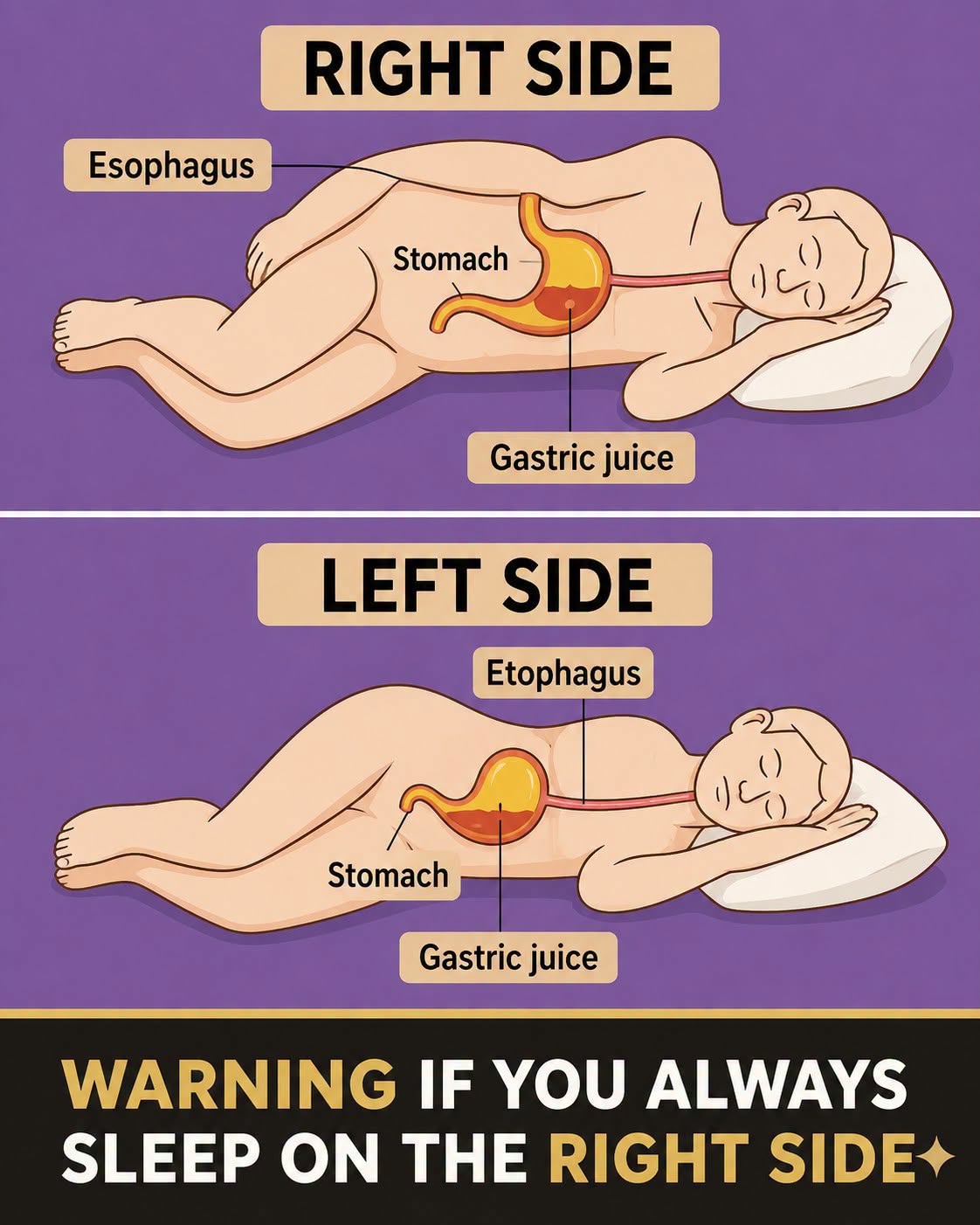
The stomach sits primarily on the left side of the upper abdomen. Because of its shape and position, lying on your left side may help keep stomach contents lower and reduce the likelihood of acid moving upward into the esophagus.
This can be particularly relevant for people who experience reflux after going to bed.
The Connection Between Left-Side Sleeping and Acid Reflux
Acid reflux occurs when stomach contents move back toward the esophagus. This can cause symptoms such as heartburn, an unpleasant taste in the mouth, or discomfort that becomes more noticeable when lying down.
For some people, sleeping on the left side may reduce nighttime reflux compared with sleeping on the right side.
The reason is largely anatomical.
When you’re positioned on your left side, the stomach’s contents may remain below the connection between the stomach and esophagus. Changing to the right side can sometimes make it easier for stomach contents to move toward that area.
That doesn’t mean right-side sleeping is dangerous. It simply means that people who experience reflux may notice a difference between the two positions.
Is Sleeping on Your Right Side Harmful?
Not necessarily.
There is no general medical rule that everyone should avoid sleeping on their right side. Millions of people sleep comfortably this way without experiencing health problems related to their sleeping position.
For many people, comfort is the most important consideration.
If you don’t experience heartburn or other nighttime digestive symptoms, there’s usually no reason to force yourself into a sleeping position that feels uncomfortable.
Your preferred position can also change naturally throughout the night.
What About Digestion?
Sleeping position may influence how comfortable digestion feels, particularly after eating.
If you regularly experience nighttime heartburn, lying down soon after a large meal can make symptoms more noticeable regardless of which side you choose.
Instead of focusing exclusively on your sleeping position, consider the bigger picture.
Leaving some time between dinner and bedtime, avoiding meals that trigger your symptoms, and maintaining a consistent sleep routine may all help improve nighttime comfort.
Sleeping Position During Pregnancy
Pregnancy is another situation in which sleeping position can receive special attention.
As pregnancy progresses, many people find side sleeping more comfortable. Healthcare professionals may provide individualized advice based on the stage of pregnancy and a person’s health history.
Rather than following a one-size-fits-all rule, pregnant individuals should follow guidance from their own healthcare professional.
Other Factors That Affect Sleep Quality
Your sleeping position is only one part of the picture.
Other factors can have a substantial effect on how rested you feel, including:
- Keeping a relatively consistent bedtime and wake-up time
- Creating a quiet, comfortable sleeping environment
- Avoiding large meals close to bedtime
- Limiting caffeine later in the day if it affects your sleep
- Reducing stimulating screen use before bed
- Choosing a pillow that feels comfortable and adequately supports your head and neck
- Addressing persistent stress or sleep disruptions
Small changes can sometimes make a noticeable difference.
When Should You Talk to a Doctor?
Occasional heartburn or an uncomfortable night doesn’t necessarily indicate a serious problem.
However, persistent or troublesome symptoms deserve attention. Consider speaking with a healthcare professional if you regularly experience nighttime reflux, difficulty swallowing, unexplained chest discomfort, repeated sleep disruption, or other symptoms that concern you.
A professional can help determine whether reflux, a sleep disorder, medication, diet, or another factor may be contributing to the problem.
The Takeaway
Sleeping on your right side isn’t inherently dangerous, and there’s no need for most people to avoid it.
However, if you frequently experience nighttime acid reflux, trying your left side may be worth considering. The position of the stomach and the effects of gravity may make it easier for some people to keep stomach contents from moving upward.
Ultimately, the best sleeping position depends on your comfort, symptoms, and individual circumstances.
Instead of worrying about one “correct” position, pay attention to how your body responds. If a particular sleeping position consistently improves your comfort and rest, that’s useful information—and if persistent symptoms continue despite simple changes, professional medical advice is the better next step.


0 comments:
Post a Comment