Those Strange Finger Wrinkles Aren’t What You Think
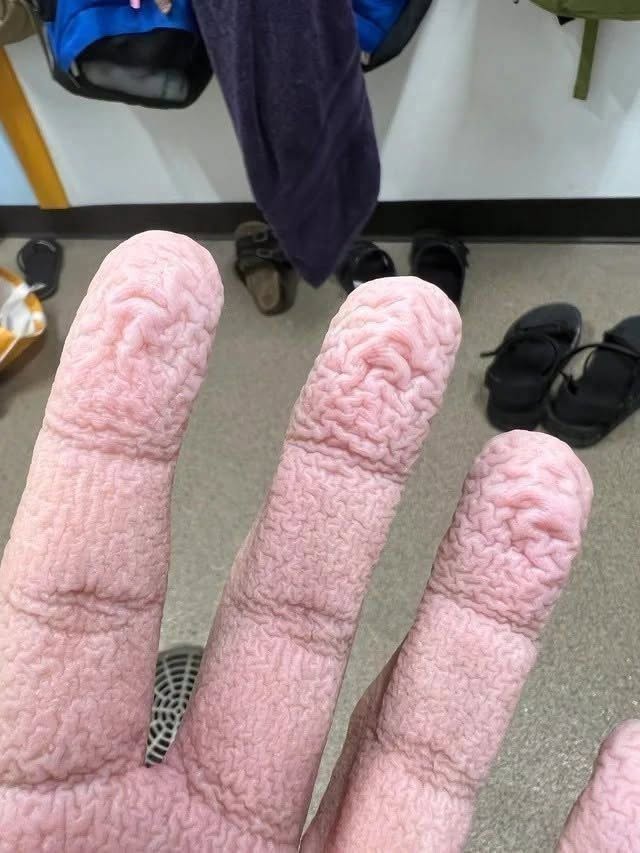
As a result, the surface of the fingertips develops temporary folds and grooves.
The response is connected to the autonomic nervous system, which controls many processes that happen automatically inside the body.
That means the wrinkling isn’t simply your fingers becoming swollen with water. Your body is actively contributing to the change.
Why Does This Happen?
Scientists have proposed that these temporary wrinkles may provide a practical advantage in wet conditions.
The grooves created on the fingertips can potentially improve the ability to handle wet or slippery objects, much like the tread on a tire helps maintain contact with a road.
Research has found evidence that water-induced wrinkling may improve the handling of wet objects in some circumstances. However, scientists continue to study exactly why humans developed this response and how important it may have been throughout our evolutionary history.
So while the idea that wrinkled fingers helped our ancestors deal with wet environments is interesting, it is better viewed as a scientific hypothesis rather than an established explanation for the entire phenomenon.
Why Doesn’t It Happen Immediately?
Your fingers usually don’t wrinkle the instant they enter water.
The response tends to develop after you have been exposed to water for a while. The exact timing can vary depending on factors such as water temperature, how long you remain submerged, and individual differences in circulation and nervous-system responses.
Once you leave the water, the blood vessels gradually return toward their usual state and the wrinkles disappear.
For most people, this is a completely normal and temporary process.
Why Doesn’t All of Your Skin Wrinkle the Same Way?
The effect is particularly noticeable on areas such as the fingertips, palms, and soles of the feet.
These regions have distinctive skin structures and contain many nerve endings and blood vessels. Their surfaces are also designed to provide traction and help us interact with objects and our surroundings.
That’s why your fingertips can develop obvious grooves in water while other parts of your body may show little visible change.
What If Your Fingers Wrinkle Without Water?
Ordinary wrinkling after a bath, shower, or swim is generally nothing to worry about.
However, if you notice persistent or unusual changes in your skin that aren’t related to water exposure, it may be worth discussing them with a healthcare professional—particularly if they occur alongside symptoms such as pain, numbness, significant color changes, swelling, or other unusual sensations.
A single skin change rarely provides enough information to identify a medical condition, so it’s best not to diagnose yourself based on appearance alone.
A Small Detail With a Bigger Story
Something as ordinary as wrinkled fingertips reveals just how responsive the human body can be.
What looks like a simple reaction to water actually involves the nervous system, blood vessels, skin, and changes in the structure of the fingertip.
The next time you notice those familiar little grooves after a bath or swim, you can think of them not as your skin simply “soaking up water,” but as an example of your body’s temporary physiological response to its environment.
And once your hands dry, the wrinkles usually disappear—leaving behind a fascinating reminder that even everyday bodily changes can have surprisingly complex explanations.




0 comments:
Post a Comment