Nostradamus and his predictions: three interpretations that some relate to the near future.
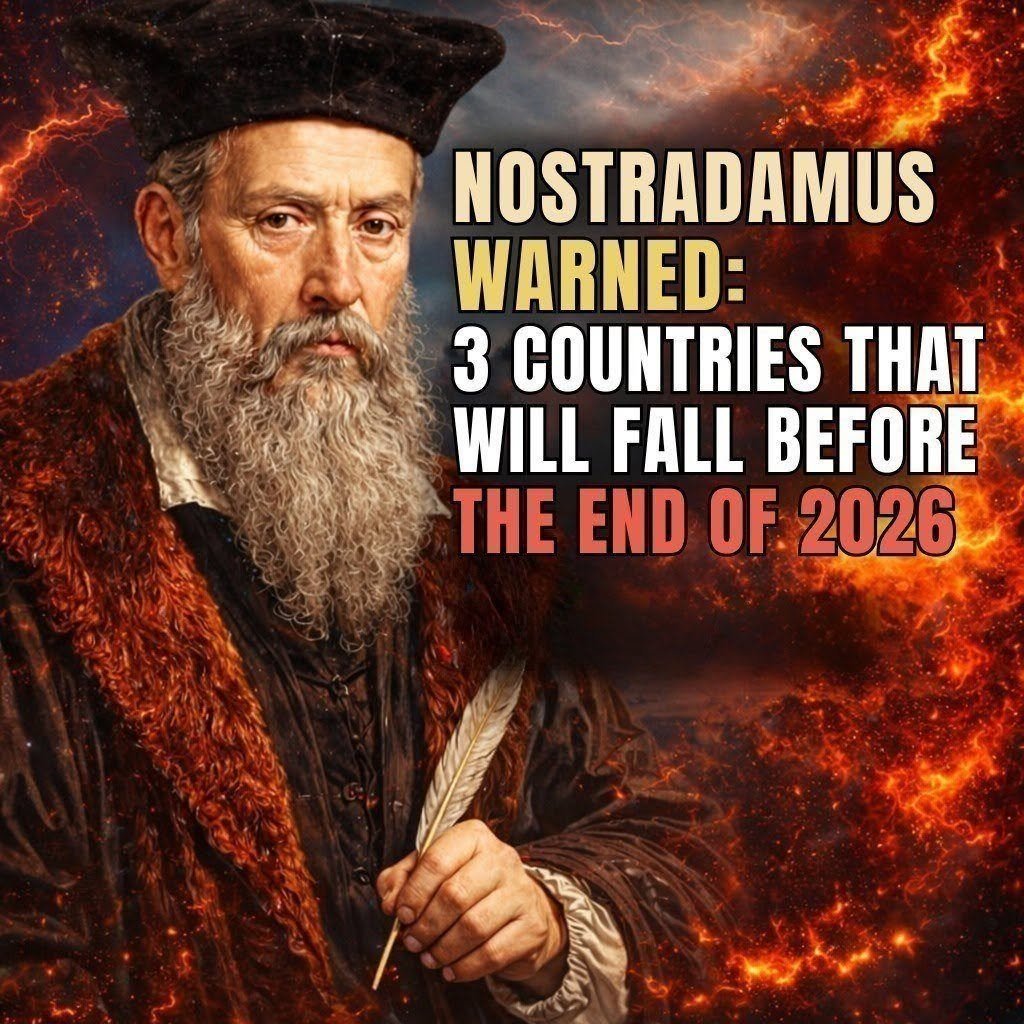
Michel de Nostredame (1503–1566), known as Nostradamus, was a French apothecary and reputed seer whose cryptic quatrains (four-line poems) have fueled speculation for centuries. Written in a mix of Latin, Greek, and Old French—and intentionally obscure to avoid persecution—his Les Prophéties contain over 900 predictions spanning centuries.
While scholars widely agree that Nostradamus’s verses are too vague to be reliable forecasts, some modern interpreters continue to link them to contemporary or near-future events. Below are three frequently cited quatrains and how they’re sometimes connected to current global anxieties:
 1. “The Great Fire” and Climate Catastrophe
Quatrain (Century 2, Quatrain 46):
“After great trouble for humanity,
The greater one is done;
A new age of gold comes,
Before the sun dries up the sea.”
- Popular Interpretation: Some link this to climate collapse—rising temperatures, wildfires, droughts, and sea-level rise. The phrase “before the sun dries up the sea” is seen as a poetic warning of extreme global heating.
- Reality Check: Nostradamus often used apocalyptic imagery common in Renaissance prophecy. “Great trouble” could refer to war, plague, or famine—events he witnessed firsthand. Most historians view this as metaphorical, not meteorological.
 2. A “New City” in the East and Geopolitical Shift
Quatrain (Century 10, Quatrain 72):
“A great city will be abandoned,
Its citizens scattered far and wide;
In the East, a new city rises,
Built on ancient wisdom and pride.”
- Popular Interpretation: Some believe this foretells the decline of Western dominance and the rise of a new global center in Asia—possibly referencing China’s Belt and Road Initiative, futuristic cities like NEOM (Saudi Arabia), or even space colonization.
- Reality Check: Nostradamus never specified “East” as Asia—it could mean Eastern Europe or the Middle East. Also, cities have been abandoned and rebuilt throughout history (e.g., Constantinople → Istanbul). This quatrain likely reflects cyclical views of empire, not a specific future event.
 3. The “Third Antichrist” and Global Conflict
Quatrain (Century 6, Quatrain 97):
“Three times the throne shall be taken by the North,
The Third Antichrist soon to appear;
He shall bring death to the great King of the West,
And terror through land and sea.”
- Popular Interpretation: Over the decades, this has been tied to Napoleon, Hitler, and now modern leaders—with some fearing it predicts a coming world war or authoritarian global crisis around 2025–2030.
- Reality Check: Nostradamus used “Antichrist” symbolically to mean tyrants or corrupt rulers, not a literal biblical figure. The “North” likely referred to England or Scandinavia in his time. Historians note he wrote during the Protestant Reformation—a period rife with fears of heresy and invasion.
 Why Do People Keep Believing?
- Vagueness = Flexibility: His quatrains are so ambiguous they can be retrofitted to almost any event (a phenomenon called retroactive clairvoyance).
- Pattern-Seeking Minds: Humans naturally look for meaning in chaos—especially during times of crisis.
- Cultural Mythmaking: Nostradamus has become a symbol of “hidden knowledge,” amplified by books, documentaries, and social media.
 Final Thought
Nostradamus wasn’t a prophet—he was a poet of anxiety.
His writings reflect the fears of his own era: plague, religious war, political instability. While fascinating as historical artifacts, they are not blueprints for the future.
As scholar Dr. Richard Carrier notes:
“If Nostradamus could predict the future, he’d have warned himself about his own son’s death… but he didn’t.”
So while it’s fun to ponder, remember:
The future isn’t written in riddles—it’s shaped by choices we make today.

The future isn’t written in riddles—it’s shaped by choices we make today.


0 comments:
Post a Comment